Guide, 5 steps
How to check for leftover baby teeth
You need
- Good light (or your phone flashlight)
- Small treats
- 2 minutes with a calm puppy
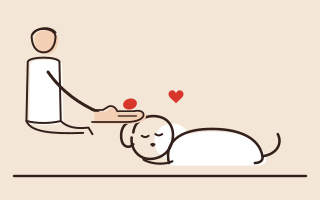
Step 1: Pick a calm moment, like after a walk. Sit next to your puppy and start with a treat.
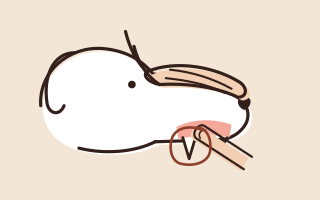
Step 2: Gently hold the top of the muzzle with one hand and lift the lip on one side with the other thumb. Look at the upper canine (the long, pointy tooth). If they struggle, stiffen, growl or try to bite, stop: try again later, practice with the handling guide first, or ask your vet to check.
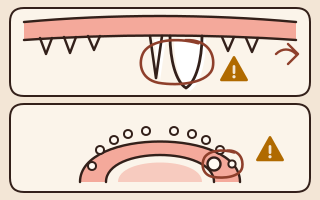
Step 3: Look for two teeth in the same spot. A retained baby tooth is thinner and sharper; the adult tooth is wider and blunter. On top, the adult canine comes in in front of the baby one; on the bottom, on the tongue side.
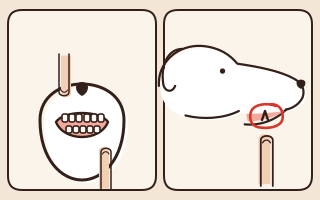
Step 4: Pull down the lower lip and check the bottom canines. Then part the lips at the front and look at the incisors (the small front teeth).
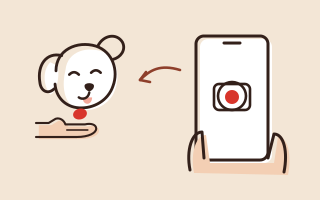
Step 5: Repeat on the other side. Finish with a treat, and if anything looks off, snap a photo to show your vet.


When to see the vet
- You see a baby tooth and an adult tooth in the same spot (most often two canines). Don't wait for it to fall out.
- At around 7 months, some baby teeth are still there.
- A lower canine pokes into the roof of the mouth or the upper gum.
- A broken tooth, very swollen gums, bleeding that won't stop, or not eating.
Sources
- Developmental Abnormalities of the Mouth and Dentition in Small Animals (Professional Version)
- The ABCs of veterinary dentistry: R is for retained primary (deciduous) teeth
- Dental Development of Dogs (Pet Owner Version)
- Estimation of Age by Examination of the Teeth in Animals — Eruption of the Teeth table (Professional Version)
- Puppy Teething & Chewing
- Puppy Body Handling (Croney Research Group)
- How to give your dog a pill
This is general information, not a diagnosis, and it doesn't replace your vet, who always has the final say.